

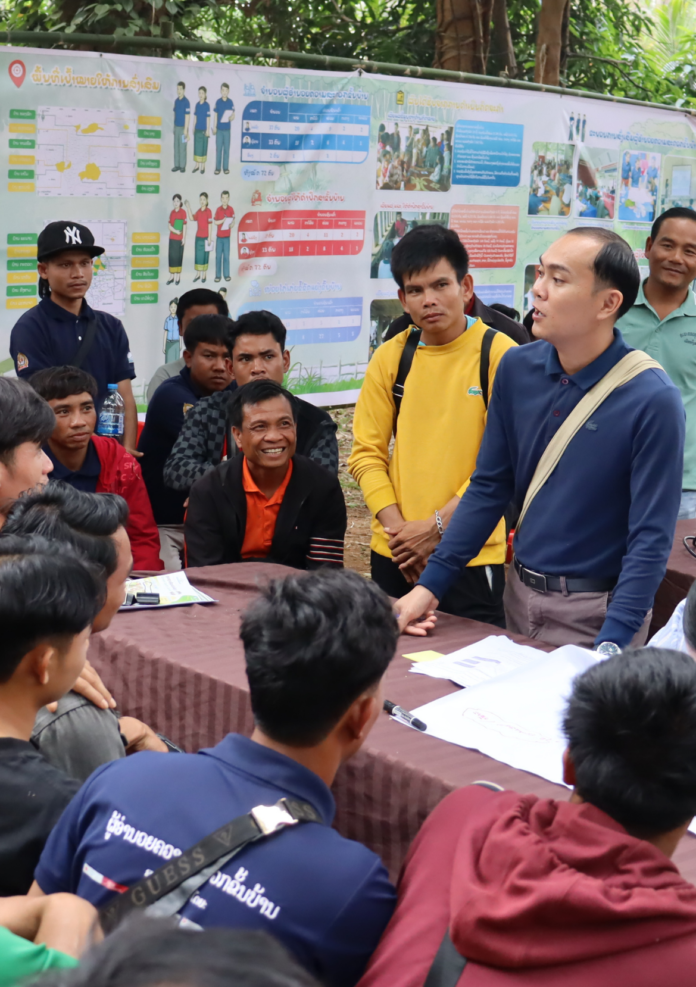
At the Green Earth Center in Salavan Province, the meeting area is buzzing with energy. Nearly 200 people have gathered, representing 39 target villages, government agencies, and civil society organizations. They are here to talk about something that touches every household: land rights, the law, and equality.
The true highlight of this gathering however isn’t a speech from the organizers. It is the confident voices of ordinary villagers especially youth and women who are stepping out of the shadows to protect their communities.
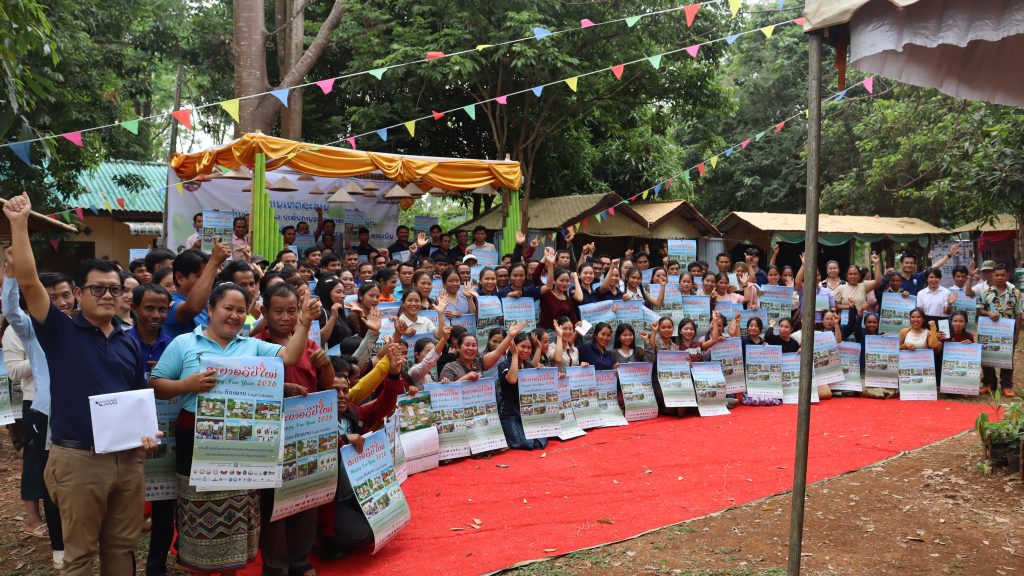 From March 19-20, 2026, 197 participants gathered at the Green Earth Center in Salavan Province to share lessons on land rights, gender equality, and access to justice @Helvetas/Soukkanhya Phommalangsy
Stepping Up as Change Agents
For communities living in or near protected forests, or those facing risks from land concessions, understanding the law is a matter of survival. Traditionally, however, legal knowledge was hard to access, and gender roles often kept women out of the decision-making process.
Through the Helvetas-led Public Information and Awareness Services for Vulnerable Communities (PIASVC) project, and thanks to Village Focus International (VFI) – who is a PIASVC’s sub-grantees, this is changing. The project trained volunteers at the provincial, district, and village levels, turning local residents into trusted legal guides.
“It wasn’t easy for us to get to this point,” one volunteer shared. “For many of us, this was completely new work.” At first, many volunteers struggled with shyness. But after receiving training and clear, simple tools like visual posters detailing the justice process, a massive shift occurred.
Today, these volunteers can present complex legal concepts without a trace of nervousness. They are actively bringing legal knowledge into 39 target villages and working alongside sectors like health, education, and natural resources.
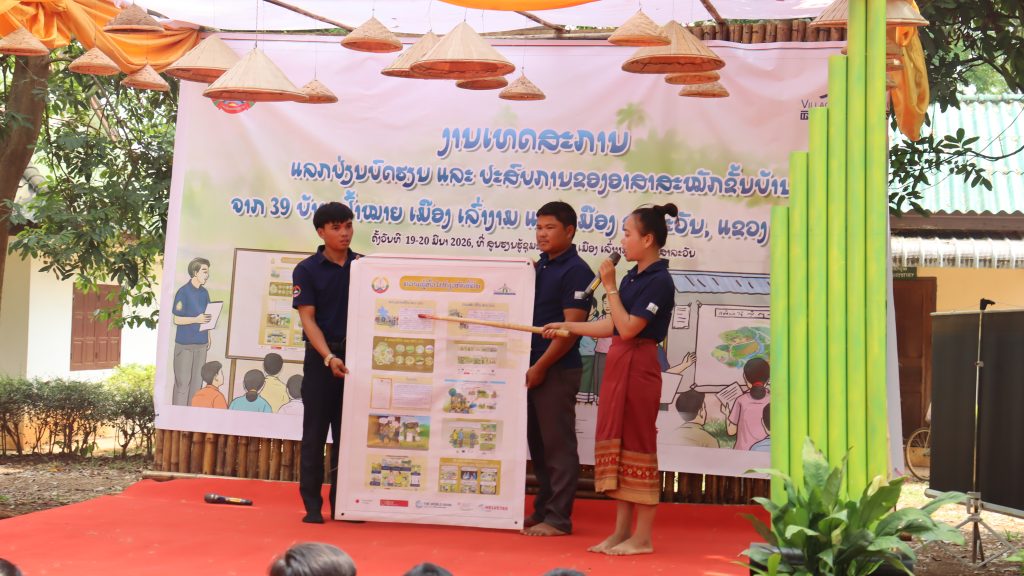 Armed with simple visual tools and newfound confidence, village volunteers explain the steps to access the justice system to their peers @Helvetas/Soukkanhya Phommalangsy
“This project gave us knowledge about gender equality and the justice system, but it also gave us courage,” a volunteer noted. “In the next five years, the youth and women doing this work will become the main leaders and decision-makers in our communities.”
Transforming the Community from Within
The impact of these volunteers is already being felt by village authorities. In rural areas, it is common for teenagers and young adults to migrate abroad for work. However, this project has provided a opportunity that encourages many youths to stay, taking on crucial roles as key disseminators of legal information.
Thanks to the volunteers’ work, villagers are increasingly daring to access the justice system. Furthermore, as the project emphasizes gender equality, both young men and women are learning together. While they may not serve directly as official mediators, these trained youths play a vital supporting role for the Village Mediation Units (VMUs). They raise awareness about land laws and provide frontline legal counseling—advising villagers on exactly what to do and where to go when they face a conflict. This grassroots support ensures that when cases do reach the mediation units, the villagers are better prepared, making it easier for the authorities to facilitate fair and mutually satisfying outcomes right at the village level. The project made this possible by providing expert “Master Trainers” who coached the local teams and developed easy-to-understand manuals and tools. This ensures the correct legal message reaches the community effectively, making the jobs of village leaders much easier
A Partnership for Justice
This grassroots movement is highly valued by government partners. Normally, when laws or decrees are updated, government staff must travel to remote communities to explain them—a heavy and time-consuming task. Now, village volunteers are sharing that responsibility
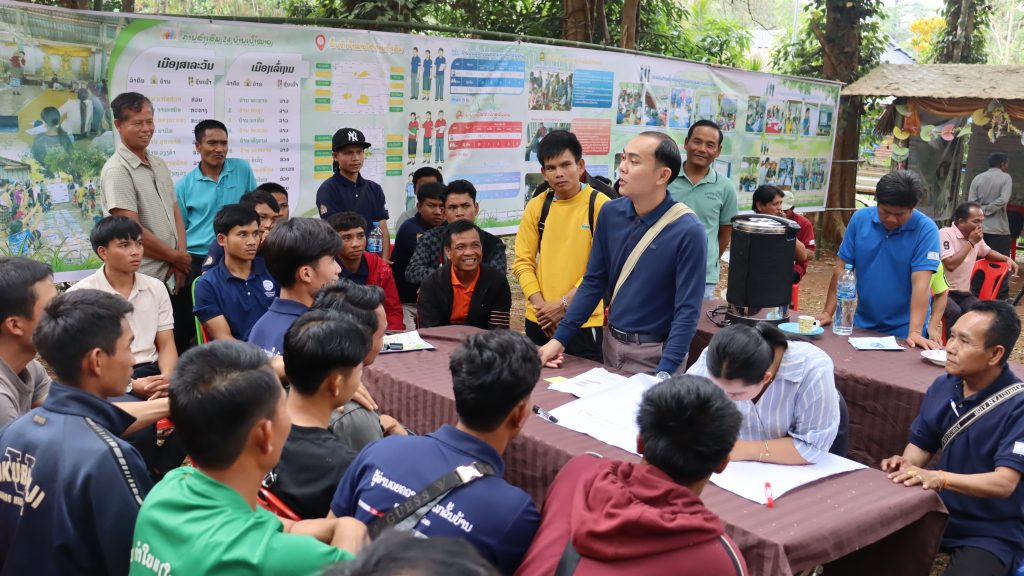 Group discussion leaders (project’s subgrant) actively discuss the real challenges they face in their villages and share their best strategies for overcoming them together @Helvetas/Soukkanhya Phommalangsy
Other Civil society organizations like VFI involved as PIASVC subgrantees bridge the gap by creating accessible manuals and videos, which have been officially endorsed by the central government.
During the workshop, government representatives noted something truly inspiring: many of the village volunteers who are successfully mediating disputes only have a first or second-grade education. Despite this, because of the accessible tools and training provided, they are grasping complex legal concepts and actively applying them to keep the peace in their villages.
Building a Sustainable Future
When Mr. Hongthong Sirivath, VFI’s Land and Livelihood Program Coordinator, looked around the meeting area at the 197 participants—91 of whom were women—he saw the true success of the project in their ambition.
During the “gallery walk” exhibition, each village proudly presented their outputs. The self-expression and public speaking skills of the youth and women were a testament to their growth.
“When we strengthen community representatives—like the village volunteers and mediation units—we are building something that lasts,” Mr. Hongthong explained. “In the future, these are the people who will drive justice in their villages. Because they live there, the knowledge stays there. That is what true sustainable development looks like.”
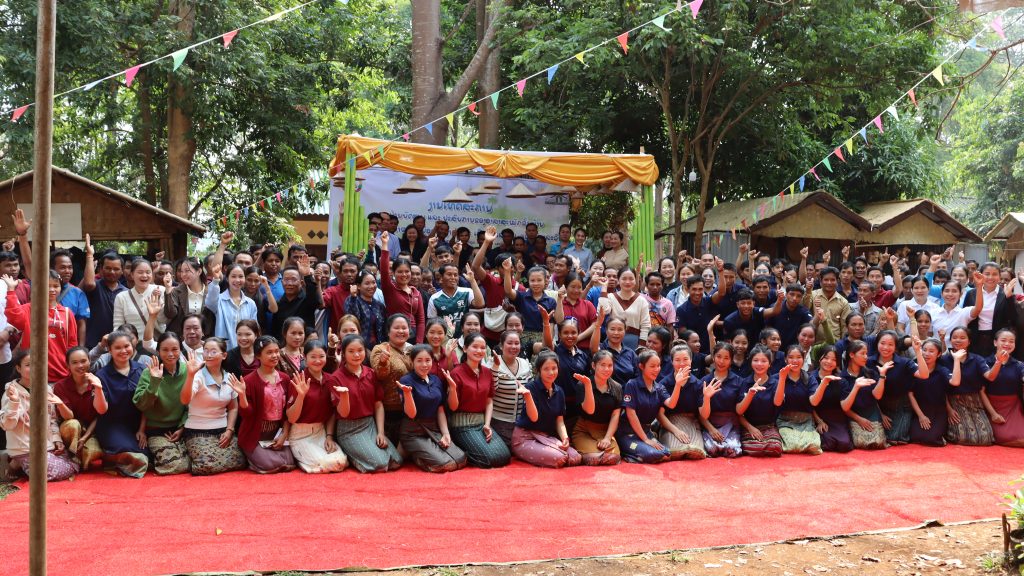 The future of local justice: empowering those who live in the community ensures that progress is sustained for generations to come. @Helvetas/Soukkanhya Phommalangsy