

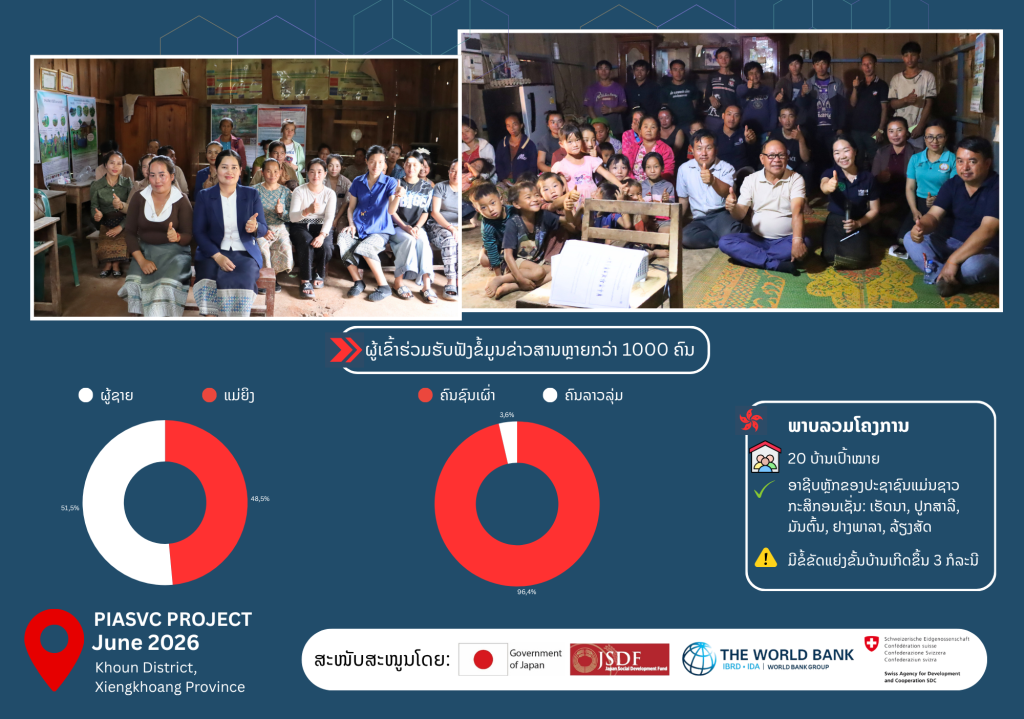
Across the 20 target villages led by the People with Disabilities Development Association of Xieng Khouang Province (PDDA), land is not just a place to live for many rural communities; it is the sole source of survival for villagers who are primarily farmers. However, in Keoleuk village - one of the target villages- the rules governing such a vital resource are sometimes influenced by informal customs, leaving visible gaps in tenure security, including for women.
Before the introduction of the Public Information and Awareness Services for Vulnerable Communities (PIASVC) project, land claims were frequently based on subjective beliefs rather than official boundaries . " People didn't really pay attention to the law," one community member recalled. "When a dispute happened, it was very difficult to talk it out. People would just claim land based on what they wanted, without any official surveys, state allocation, or the agreement of the village chief."
This lack of clarity created an environment where disputes could happen anytime, particularly affecting women in ethnic communities where traditional patriarchal norms often exclude them from land ownership decisions.
Today, however, the project has implemented awareness-raising activities on customary land rights recognition and gender equality in land management.. Led by PDDA, over thousands participants have engaged and received information from the project. Targeted legal training, focused on land use rights, formal law-based mediation processes and gender equality, is now triggering a shift in how fundamental rights are perceived in these village..
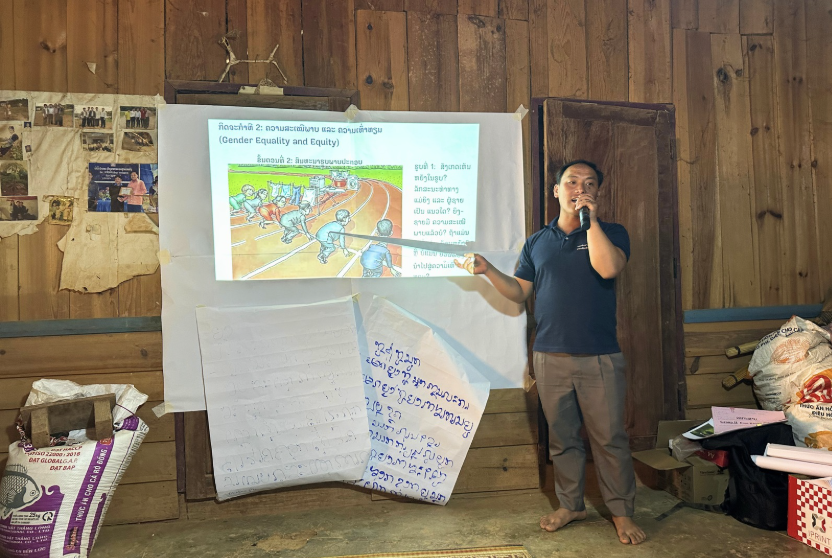 A community representative share his thoughts on visual reflecting how some tasks may create obstacles for women in daily life, brainstorming on how husbands and wives can support each other moving forward@helvetas/Soukkanhya Phommalangsy
What stands out the most are the positive changes observed at family level. By explicitly leading activities around the legal concepts of joint property and the right to have both the husband's and wife's names on the land title, the project has helped raising awareness around the fundamental rights of women and has helped building mutual respect within families. .
“"I used to feel anxious, afraid, and pitied wives who were victims," shared a female community member.. “"But the training emphasized that women are also a gender that should be cared for, protected, and have equal rights under the law.".”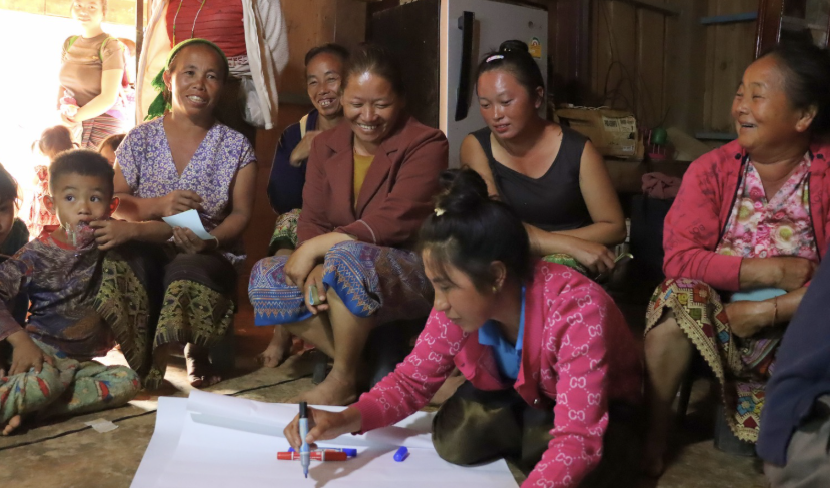 A women’s group brainstorming on the obstacles and past challenges related to gender equality,, so they can be presented to and acknowledged by the men group. Photo by: @helvetas/Soukkanhya Phommalangsy
Another villager stated: "I believe the training from this project will help husbands and wives see each other's importance and help each other more. Everyone, regardless of gender, should know the law to protect the land for our children in the future.".”
Empowering Authorities to Lead with the Law For the Village Chief of Keoleukvillage-level mediation is a crucial gateway to the justice system.. “"In the past, if people didn’t know the law during a dispute, they would often argue based on their own opinions and refuse to listen to anyone else" he explained.
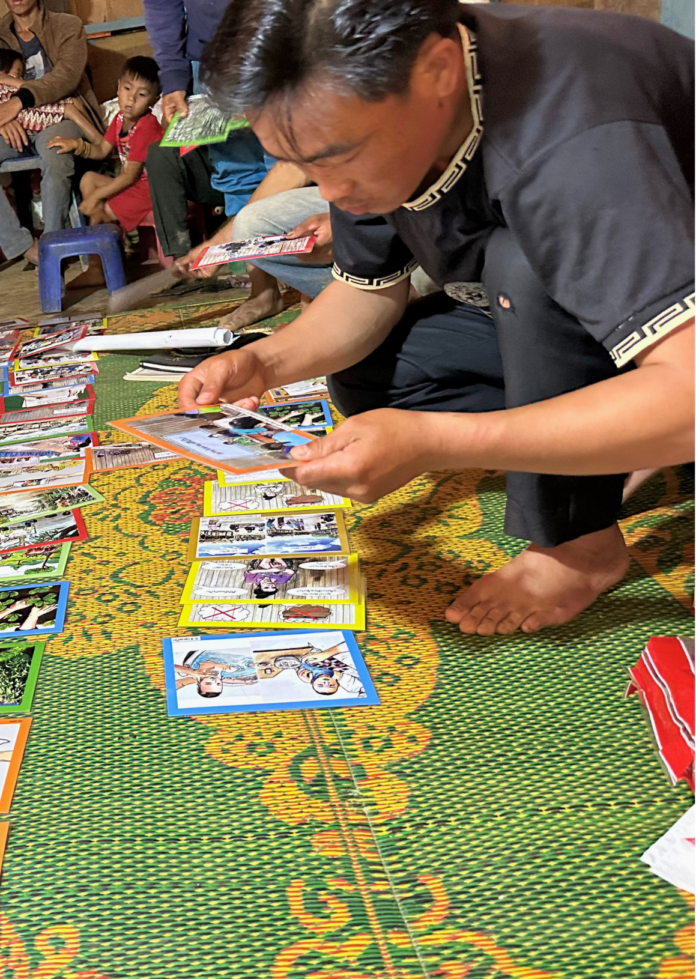
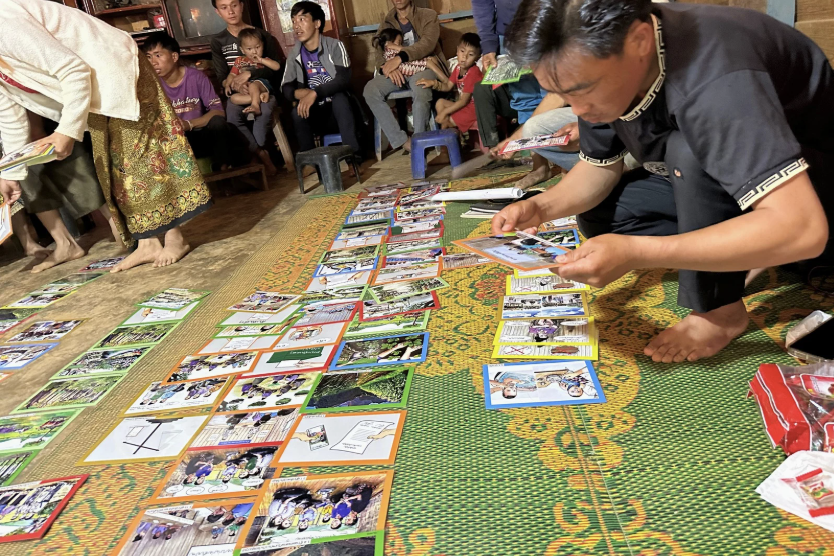 Villagers sorting out cards that explain daily roles and responsibilities between men and women. This helps the community reflect on past practices and consider helping each other more within the family Photo by: @helvetas/Soukkanhya Phommalangsy
Land tenure rights are essential for communities where farming is predominant. The project was successful in offering a large variety of tools and posters on a wide range of land right related topics and including on access to justice. As a result, the village committee now is better equipped for resolving disputes.
"Now we plan to establish new measures based primarily on the law, which will encourage active participation from the people and make dispute resolution fairer and easier," the Village Chief concluded.
In addition, after receiving training, the villagers now clearly see the importance of land titles. This was highlighted when the Village Chief spoke about future plans: "In the next step, if possible, we plan to refer to the District Agriculture and Environment Office to conduct actual measurements, leading the community away from arbitrary land grabs and toward secure, state-recognized land tenure."
A "Win-Win" for Citizens and the State Such a success at the grassroots community level like Ban Keoleuk village has raised attention from government partners. A representative from the Provincial Department of Justice highlighted how this project directly supports the government's goals:
"The project coming down to help raise legal awareness helps ease the government's burden, especially the budget for disseminating legislation in remote communities. If citizens have access to legal information, it makes them proactive and afraid to violate rules—for example, not encroaching on restricted areas like protected forests. This will help our country conserve natural resources together for the future."
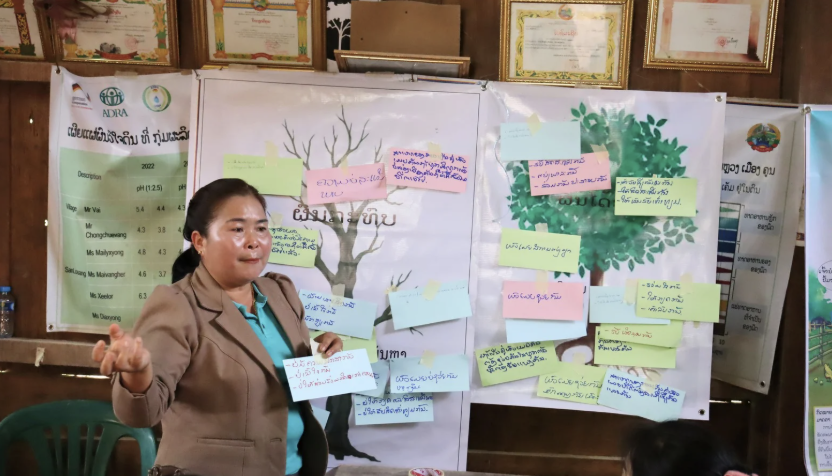 A district-level government partner leads the community in identifying root ‘problems through a"Problem Tree" exploring the main causes of land disputes and equality issues. Photo by: @helvetas/Soukkanhya Phommalangsy
A Sustainable Foundation for the Future While the initial results are highly encouraging, local officials still hold a realistic view that changing deep-rooted traditions cannot happen overnight.
"We understand that changing traditional mindsets is not easy; doing it immediately is impossible and it must be absorbed step by step," noted a representative from the District Agriculture and Environment Office after attending the training. "But we are seeing a shift. When disseminating information, the villagers are interested, ask many questions, and most of them also promise to comply."
By turning formal legal information—once a barrier for vulnerable communities—into accessible, community friendly knowledge, PIASVC project has laid the groundwork for a future in which people better understand their fundamental rights. As villagers return home and share what they’ve learned, they become empowered citizens, ready to safeguard their families, their land, and their future.
The PIASVC project is implemented by Helvetas Laos and the Department of Land Administration and Management, MAE with a subgrant allocated to People with Disabilities Development Association of Xieng Khouang Province. It is funded by the Swiss Development & Cooperation Agency and the Japanese Social Development Fund administered by the World Bank.